Why joints matter
A joint decides how strong a piece is and how it ages. Good joints use glue and mechanical fit together.
Poor joints loosen and rattle.
Butt, rabbet and dado
A butt joint just meets at an edge. Rabbets and dados cut a step or groove for better alignment and strength.
These are common in cabinet boxes.
Mortise and tenon
A tenon on one piece fits into a mortise cut in the other. It is the classic joint for table frames, doors and chairs.
It resists racking and lasts for generations.
Dovetails
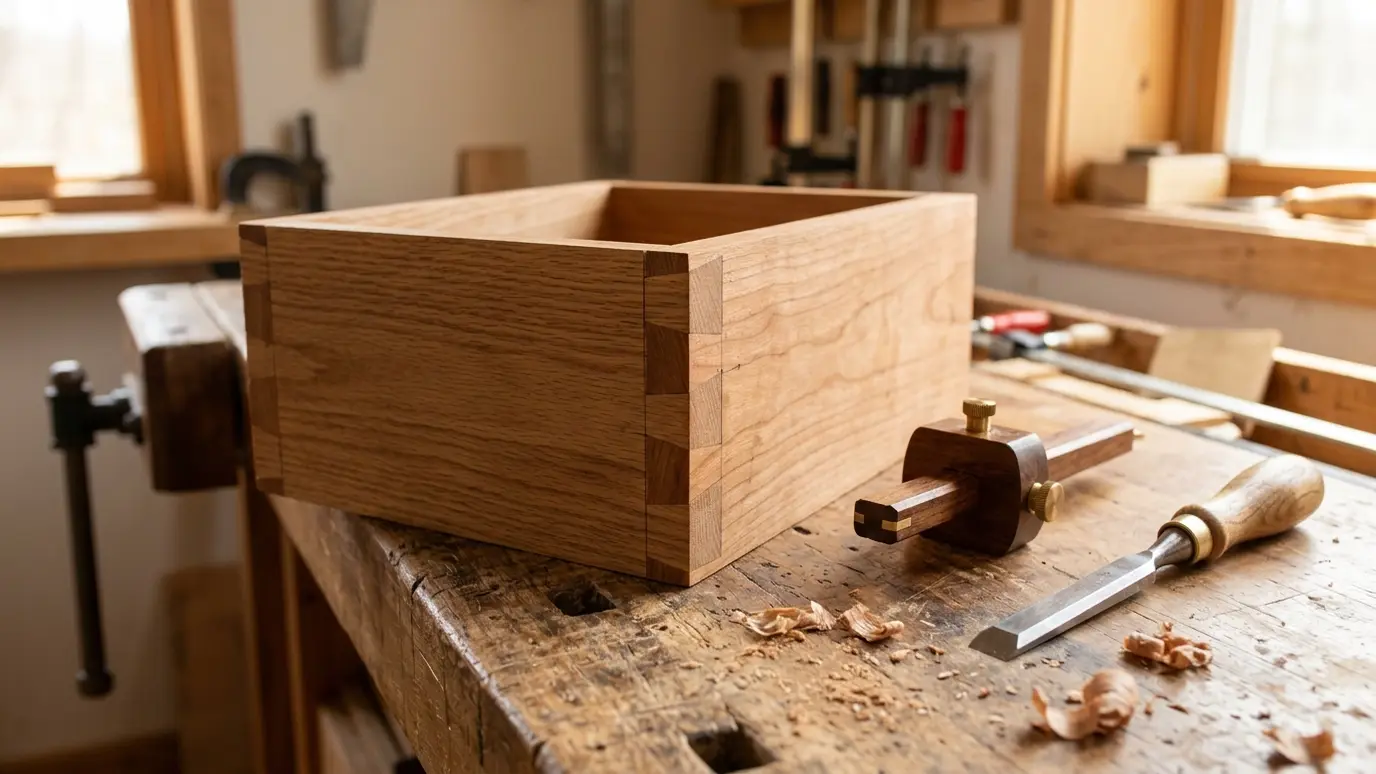
Interlocking tails and pins resist pulling apart. They are the mark of a quality drawer.
Hand cut or machine cut, they are strong.
Pocket screws, biscuits and dowels
Modern joints speed work and are fine for many uses, such as face frames. They are not always right for heavy furniture.
Match the joint to the load.
Joinery and wood movement
Wood moves across the grain, so joints must allow it. Panel doors float in frames for this reason.
Ignoring movement causes cracks.
Use traditional joints where strength matters, modern ones where speed helps, and always allow for movement.