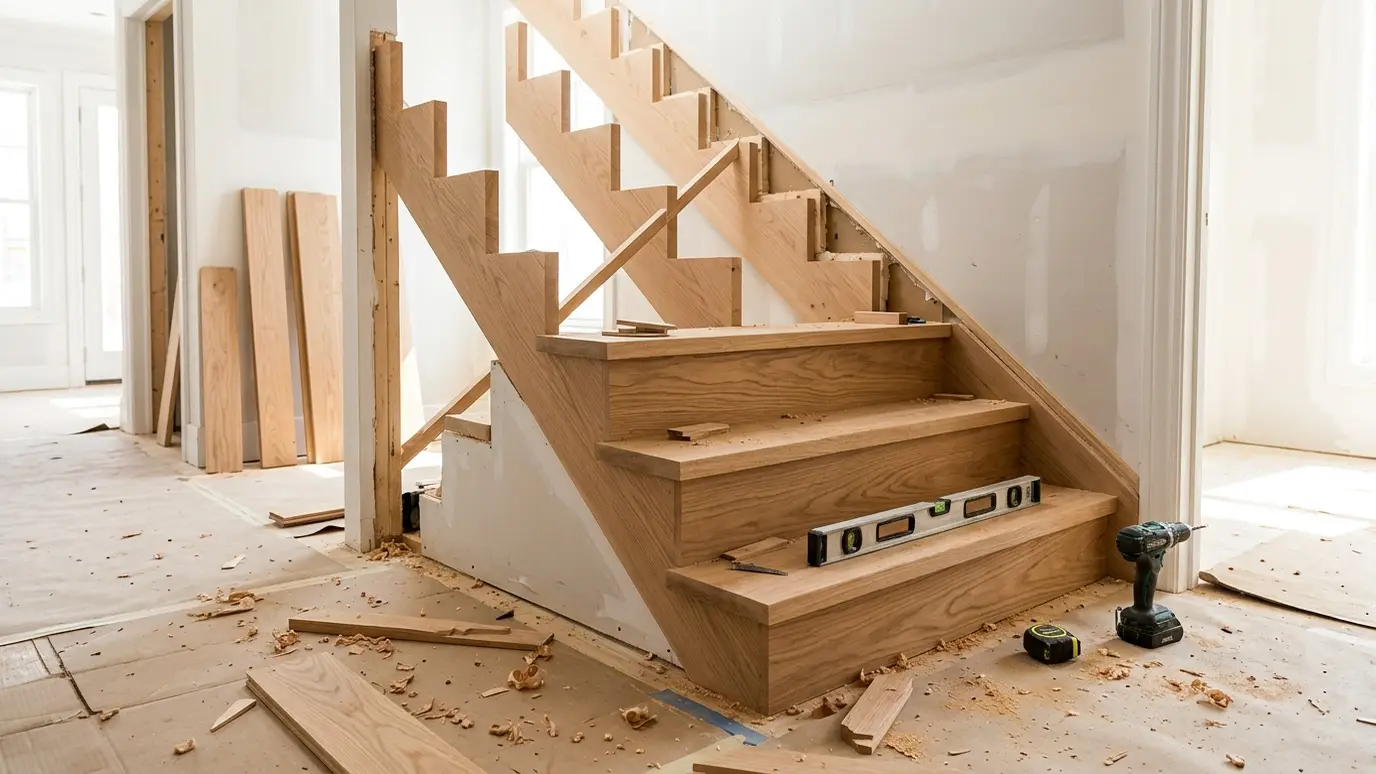
Rise and run
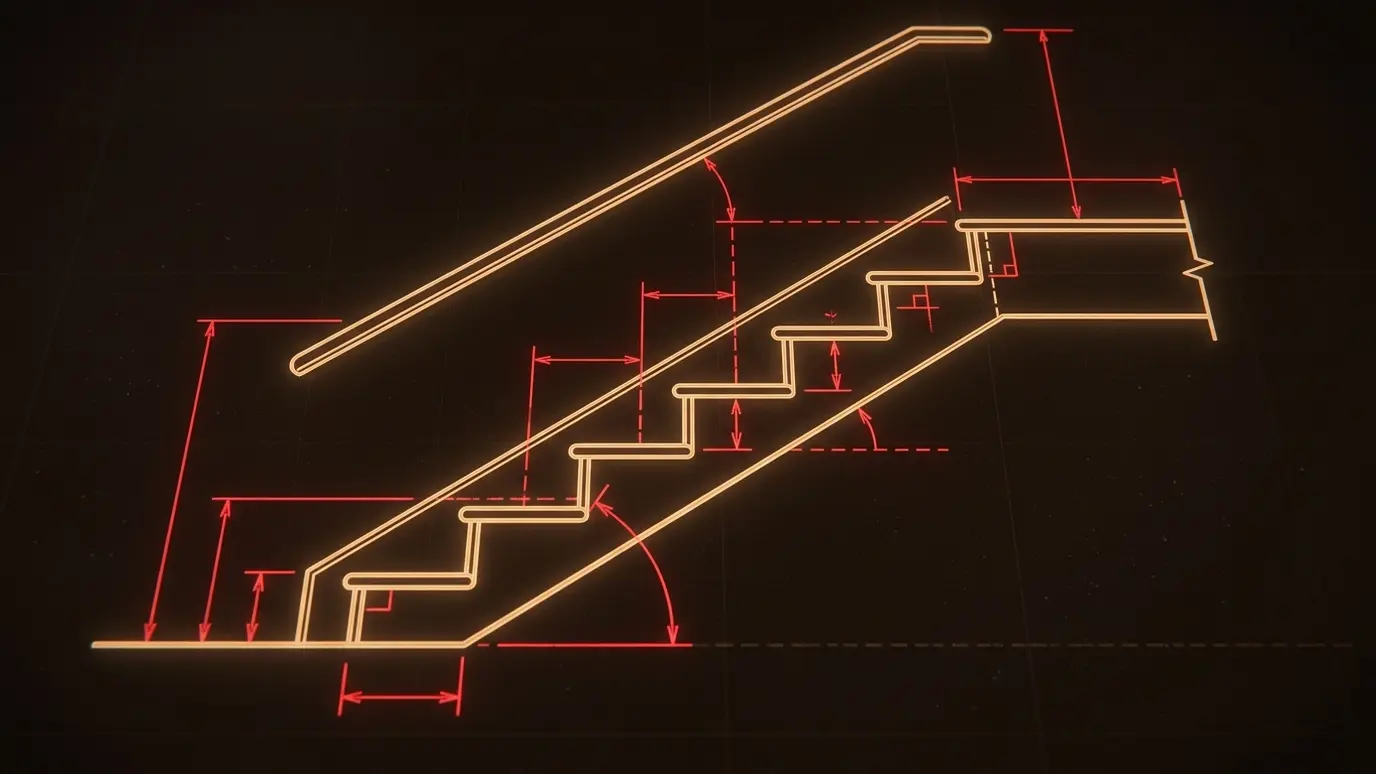
Rise is the height of each step and run is its depth. Comfortable stairs have a rise of about seven inches and a run of about ten or eleven.
Every step in a flight should be the same within a small tolerance.
Total rise and the layout
Total rise is the vertical distance between floors. Divide it by a comfortable riser height to get the number of steps, then adjust to make them equal.
Finished floor thickness changes the numbers.
Headroom and width
Stairs need enough headroom to clear your head and enough width for people and furniture. Rules set minimums.
Tight stairs feel unsafe.
Handrails and guards
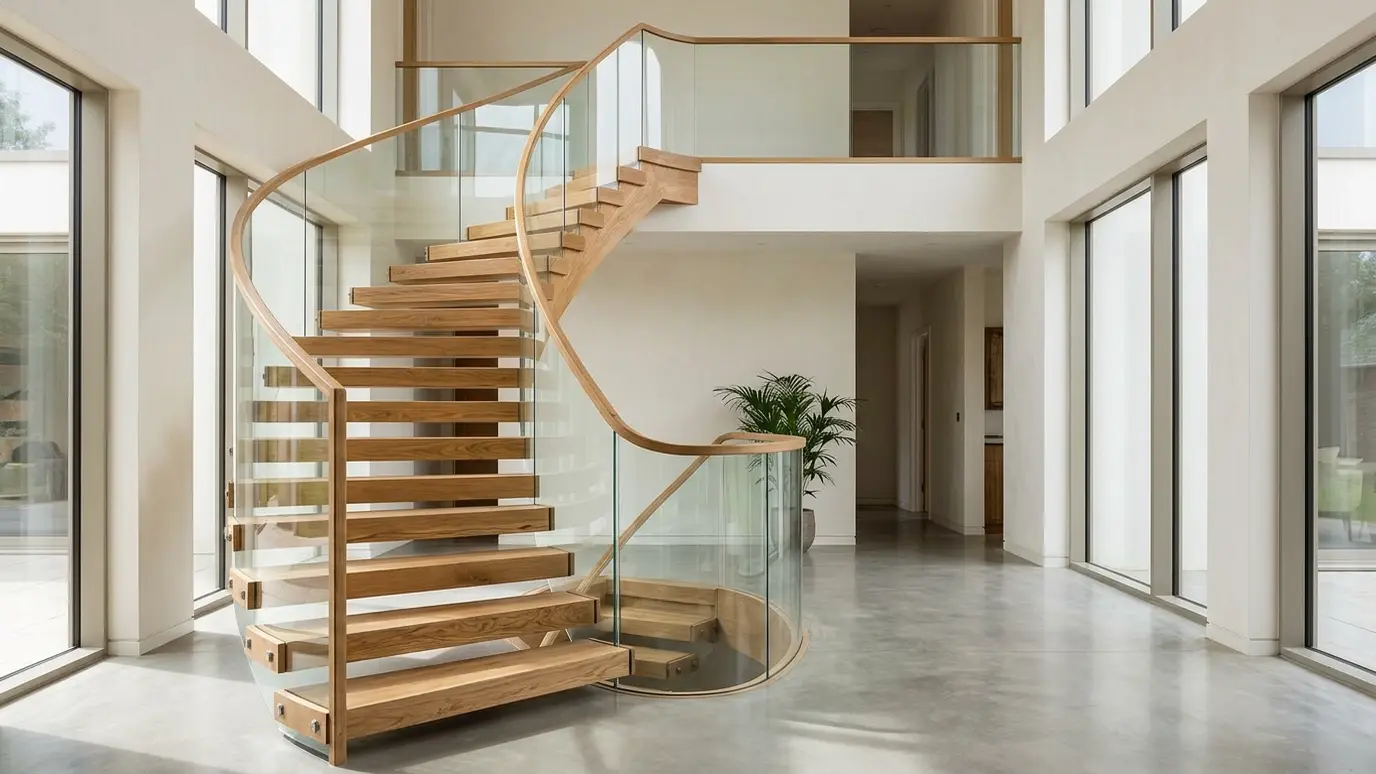
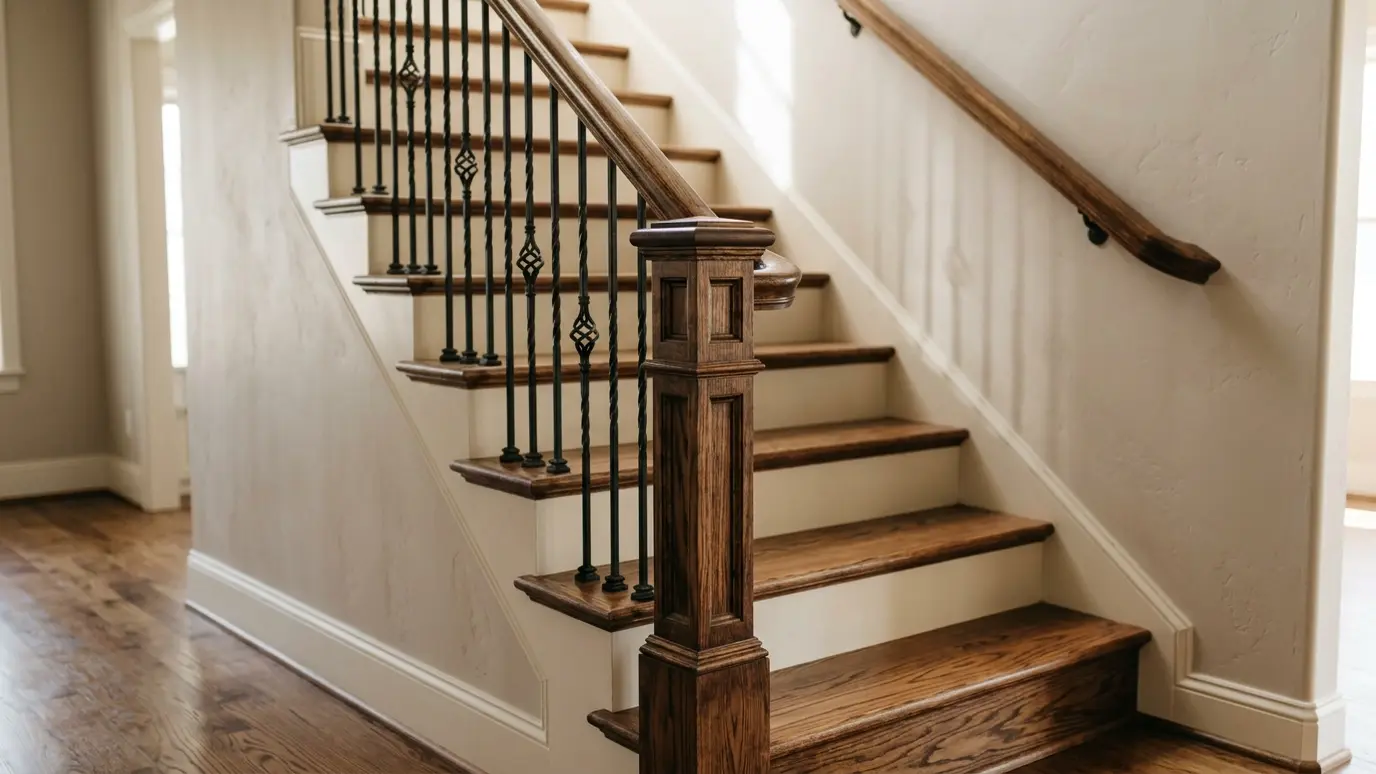
Handrails should be continuous, graspable and at a comfortable height. Open sides need guards with baluster spacing that prevents falls.
Rules vary, so we check the ones that apply.
Materials and noise
Solid treads, glued and screwed down, and blocked stringers reduce squeaks. Carpet softens sound and hardwood adds style.
Squeaks come from movement.
Planning a new stair
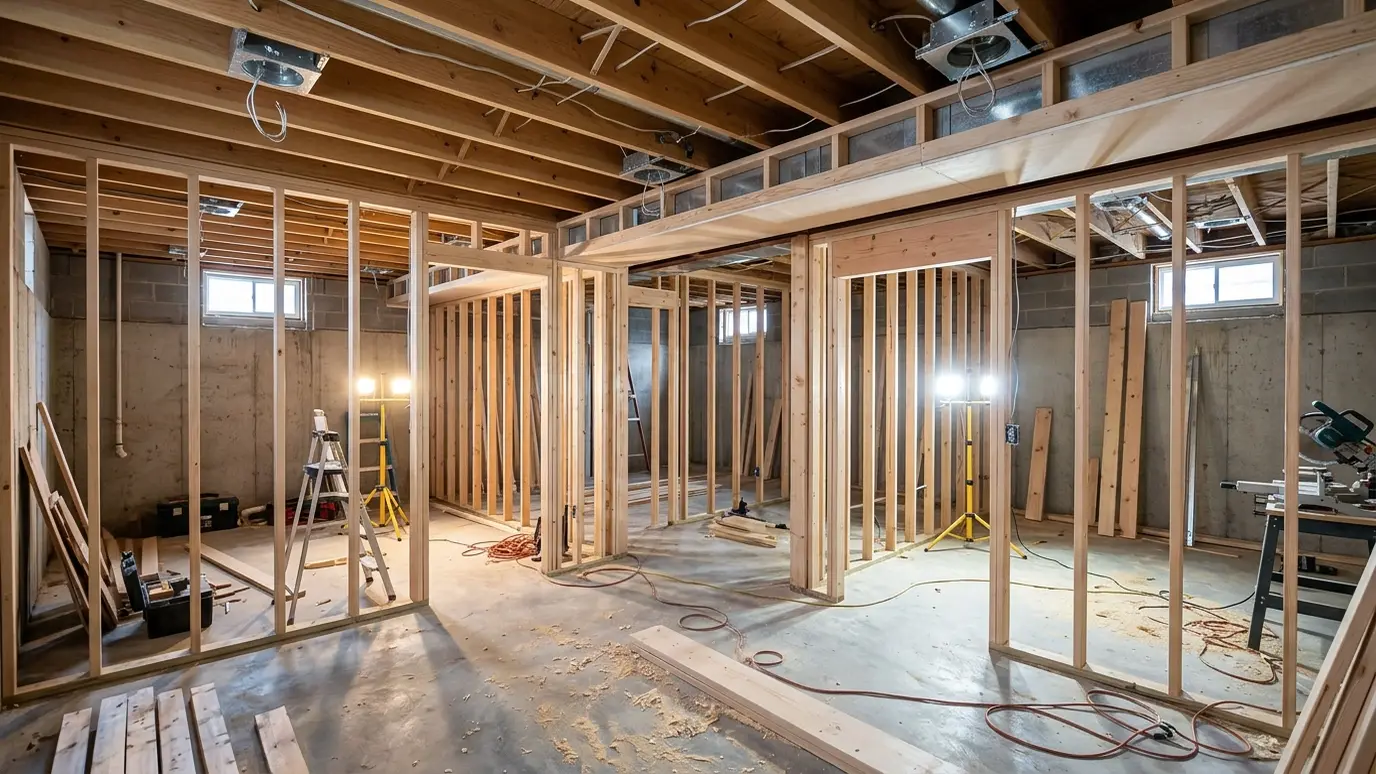
A new stair needs space, framing changes and often a permit. Starting with a layout and a mock-up shows how it will feel.
Our stair tool helps.
Keep every riser the same, give treads enough depth and build rails that feel solid.